- Published on
Do You Still Need a Developer If AI Can Build Your App?
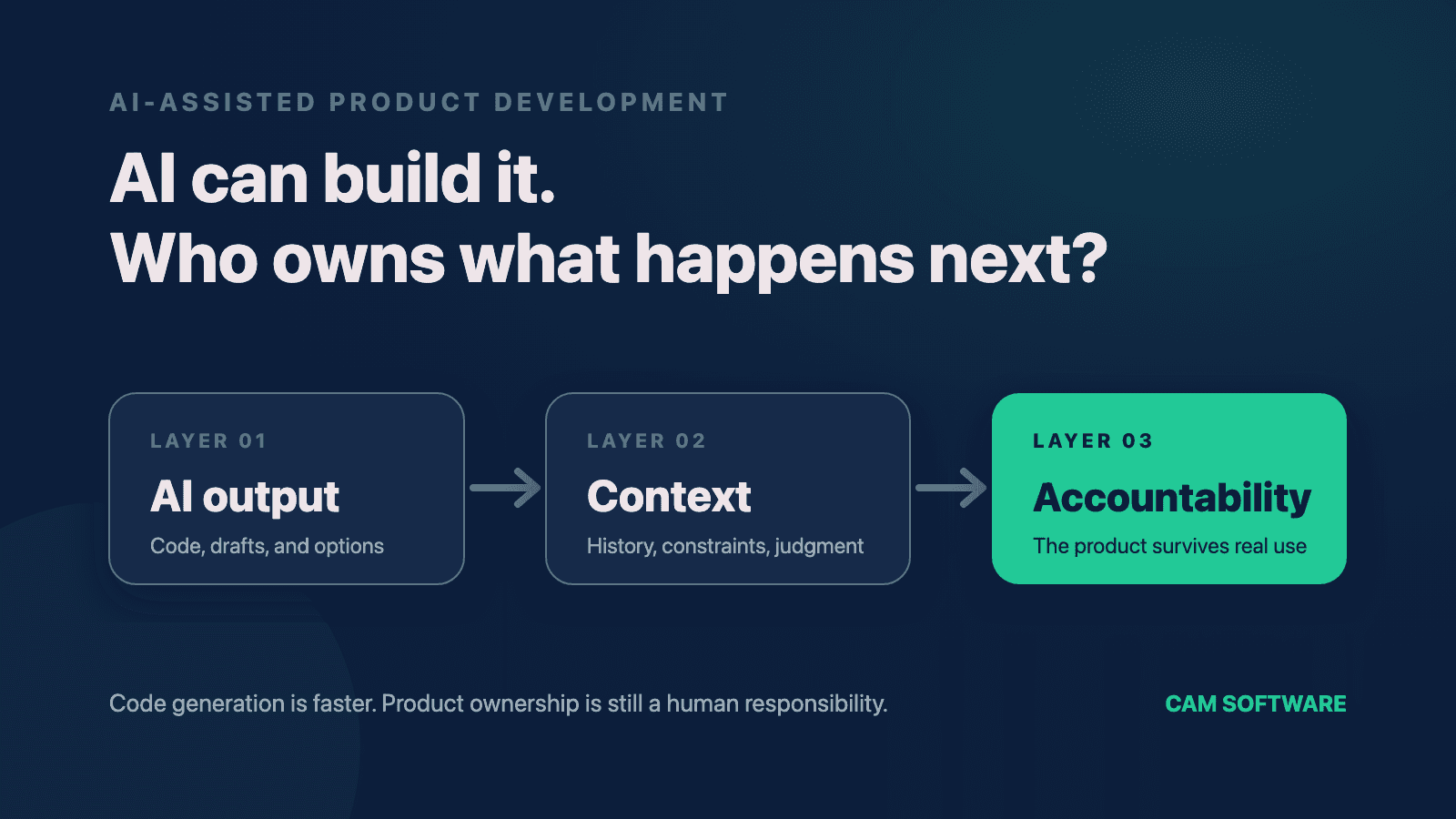
I saw a Reddit post that compared AI turning everyone into a developer with phone cameras turning everyone into a photographer. I understand why the comparison landed. AI has made building software more accessible, and I think that is a good thing.
But owning a camera and delivering professional photography are different responsibilities. So are generating code and owning a product.
If you are trying to prove an idea, build a small internal tool, or automate a task for yourself, AI may be all the help you need. If customers, revenue, sensitive data, app-store releases, or a long-lived codebase depend on the result, I still think you need a developer who understands that kind of product.
The reason is not that AI cannot write enough code. It is that writing code is only one part of the job.
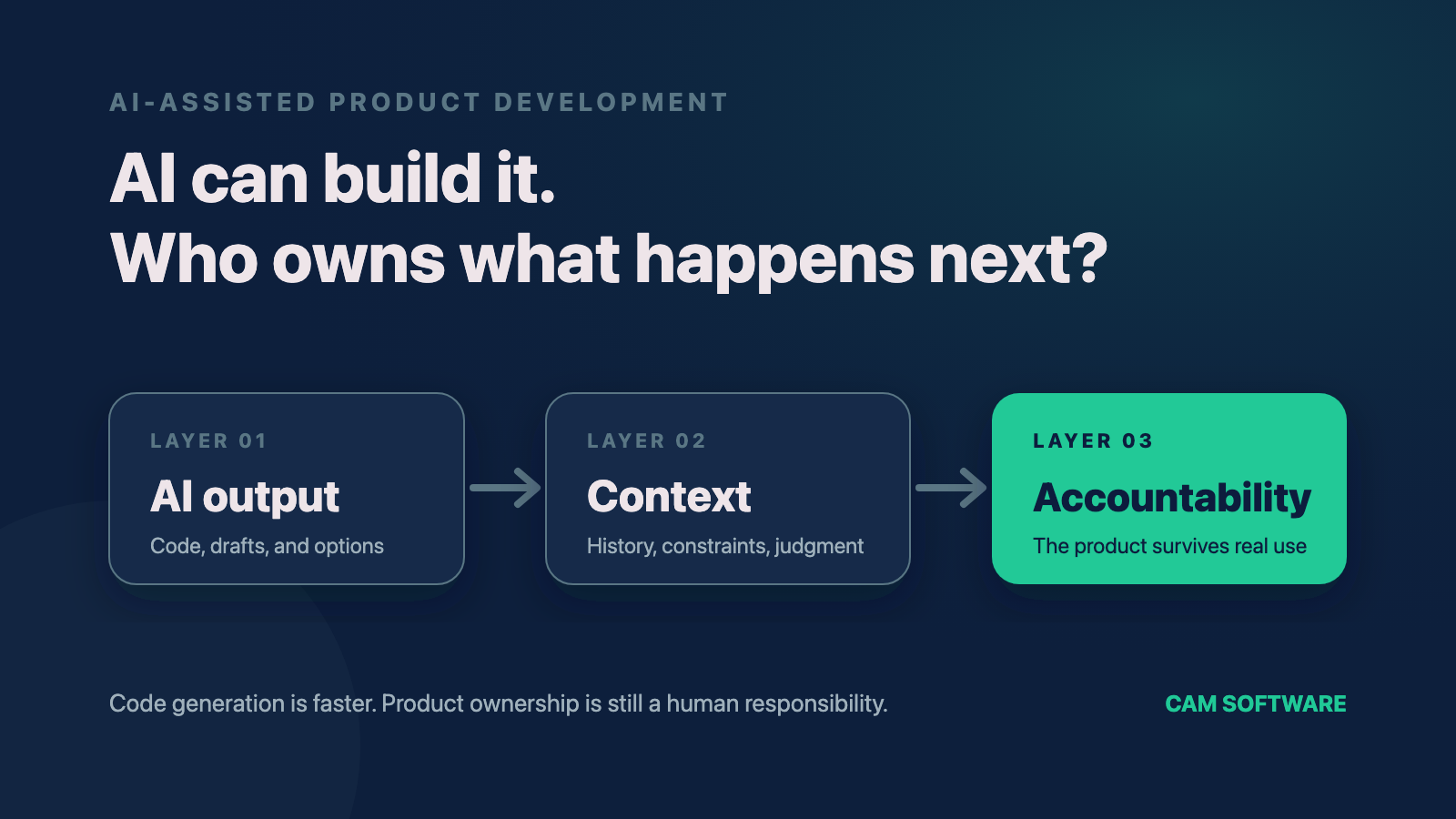
AI can create the output. A specialist still has to connect that output to the product and own what happens next.
AI only knows the context it can reach
I have watched a team answer a question about a mobile feature almost immediately because the developers remembered why it worked that way, which constraint was involved, and what would have to change. An AI tool could inspect the same code, but it would first need the right repository context, documentation, history, and question.
I have also watched an AI tool give a reasonable-sounding explanation for unusual code and still be wrong. The original developer knew that the code existed because of an old marketing requirement. That history was not obvious from the implementation itself.
The lesson is not that AI is bad at reasoning. The lesson is that context has to exist somewhere the tool can retrieve it. If a decision lives only in a conversation from two years ago, the model cannot reliably reconstruct it from the shape of the code.
This is one reason documentation and clear development practices matter even more now. GitHub's own guide for reviewing AI-generated code tells teams to verify that the output fits the project's purpose, architecture, requirements, and design patterns. It recommends supplying trusted documentation and recent pull requests as context.
That is useful advice, but somebody still has to know which context matters.
A passing result can still be the wrong result
An AI agent can satisfy the acceptance criteria and still create a second version of a component the app already has. It can produce code that compiles while moving the architecture in the wrong direction. Another AI reviewer may confirm that the change matches the ticket without recognizing that the team already solved the same problem somewhere else.
I have seen this improve when teams strengthen their agent instructions and make reusable patterns easier to find. The AI begins to behave more consistently because the team gave it a better system to work inside. It still does not remove the need for someone who can recognize when the implementation is technically valid but wrong for the product.
That is also the position GitHub takes in its Copilot best practices. The tool can make mistakes, and the suggested code should be understood, reviewed, and validated for more than functionality. Maintainability and security still count.
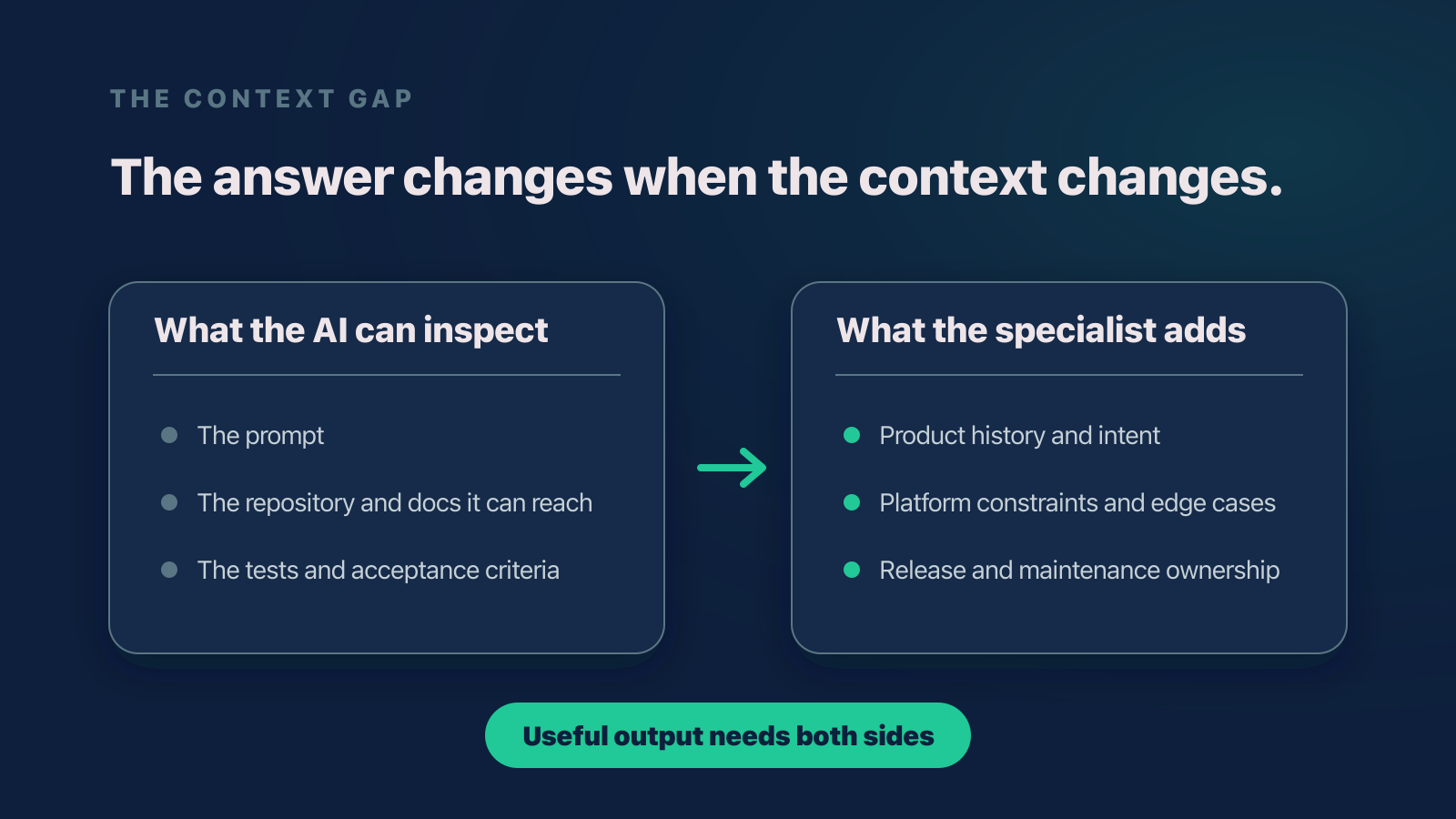
The gap is usually not typing speed. It is knowing which product history, platform constraint, or edge case changes the decision.
Product judgment includes the test you remembered to run
I once looked at a website someone had built with AI. It looked fine on the desktop they were using. On my phone, it did not look good at all.
The builder had not failed because they lacked access to better code generation. They simply had not thought to test that experience on a phone.
That is what experience often looks like in practice. A specialist remembers the other device, the odd permission state, the slow network, the store review rule, the upgrade path, and the release artifact the test environment actually needs. Those questions become part of the work before a customer discovers them.
I have had a similar experience helping a QA team install a mobile build in a simulator. The AI-generated instructions sounded confident, but they pointed the team in the wrong direction. Mobile experience made the mismatch obvious enough to stop, diagnose the real issue, and fix it without taking the repository through a risky sequence of guesses.
AI is valuable in both stories. It can research, explain, generate, and help narrow a problem. The person using it still needs enough domain knowledge to notice when the answer does not fit the environment.
Specialization still matters
Software skills transfer. A good web developer can learn mobile development, and AI can make that learning faster. I encourage that kind of growth.
The business question is different when the product has to ship now.
I spoke with someone whose customers began asking for a mobile app after the web product launched. They hired an external team with one mobile developer and several web developers because they needed to move quickly. The app eventually reached a point where the company's own backend engineers had to step in and repair it while learning mobile work along the way.
That does not mean web developers cannot build mobile apps. It means the company accepted a specialization gap during a time-sensitive project and paid for that gap later.
If the immediate need is a customer-facing mobile product, hire someone who has shipped mobile products. If the product is already struggling, a React Native specialist or a team experienced in repairing an AI-built app can recognize risks that are easy to miss when the goal is only to get the next screen working.
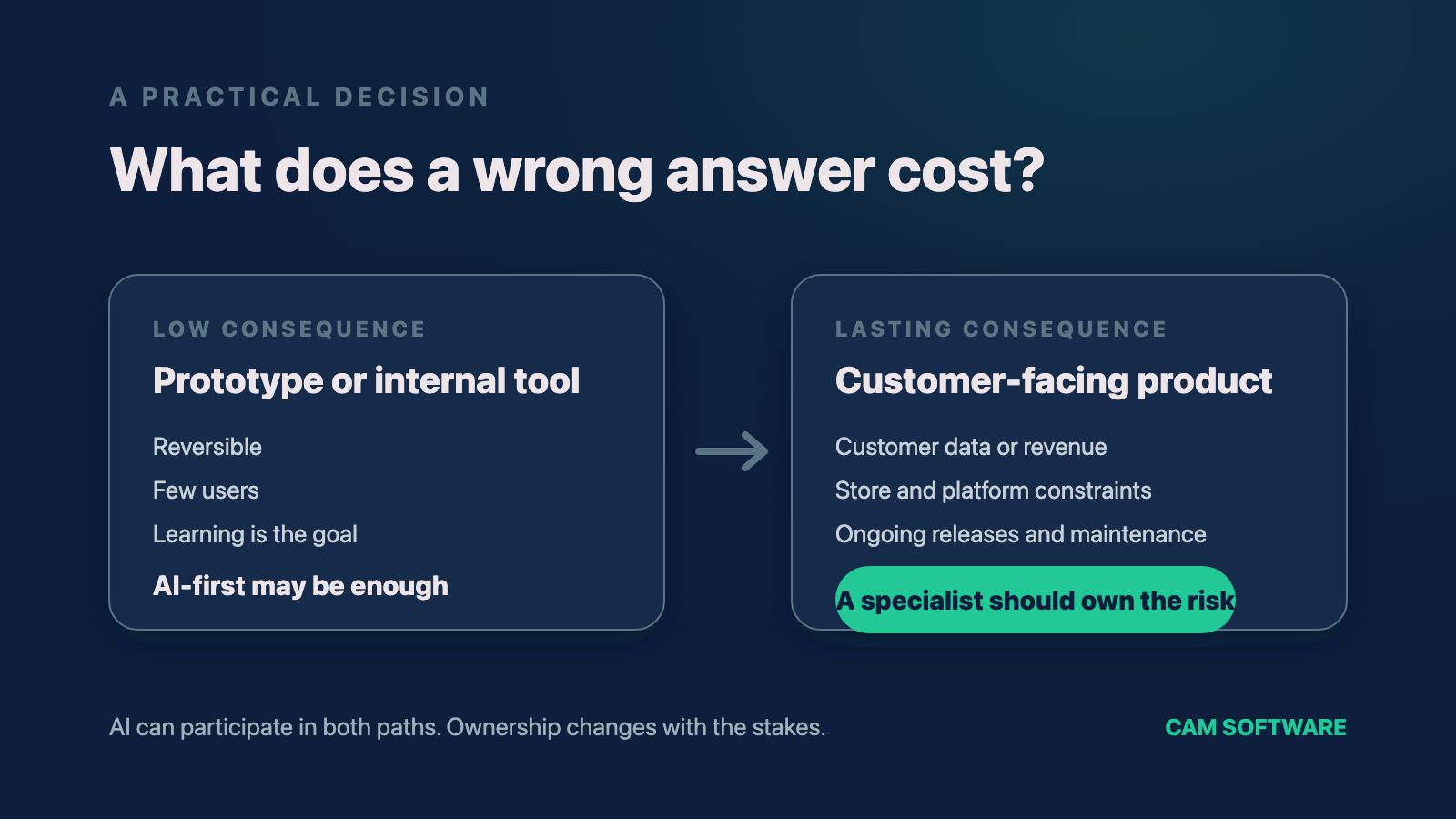
The more expensive a wrong answer becomes, the more important it is to have a specialist own the decision.
The best use of AI still includes ownership
I am not arguing for less AI. I use it heavily. I have watched it help teams consolidate patterns, create tests, investigate bugs, and move through work that used to take much longer.
The broader research is landing in a similar place. DORA's 2025 report on AI-assisted software development describes AI as an amplifier of the system around it. Strong workflows become more capable. Weak workflows can produce their problems faster. DORA's later analysis also found that time saved during initial generation is often moved into auditing and verification.
That distinction matters for a business owner. AI can lower the cost of producing a first answer. It does not automatically lower the cost of knowing whether the answer is safe, maintainable, and appropriate for the product.
I would think about the decision this way:
- If the work is reversible, low-risk, and mainly for learning, start with AI and see how far you get.
- If real customers depend on it, decide who owns architecture, testing, security, release, and maintenance before you decide who writes the code.
- If the work is specialized and time-sensitive, bring in the specialist early enough that they are shaping the system instead of only rescuing it.
That ownership can come from an internal developer, a fractional technical leader, or an embedded product engineering partner. The title matters less than the responsibility being clear.
AI has made more people capable of building useful things. I genuinely like that. I just do not think capability and responsibility are the same thing.
You can build more than you could before. The question is whether you know what the product will ask of you after the first version works.
Need help with your project?
Chris Martinez
Founder of CAM Software · Mobile engineer
Chris founded CAM Software in 2022. He leads embedded product engineering engagements for established companies with mobile-led products, inherited applications, and delivery challenges. His work spans product alignment, React Native and native mobile engineering, supporting web and backend systems, release reliability, and responsible AI delivery. He also operates software products owned and operated by CAM Software from Northwest Arkansas and works with teams nationwide.