React Native is still a great choice for most new apps. Here's why CAM Software is building its own apps native anyway: tablets, foldables, package risk, and speed.
A practical website-vs-app decision: when speed and learning favor the web, when device features and known demand justify a mobile app, and why App Store work is part of the product.
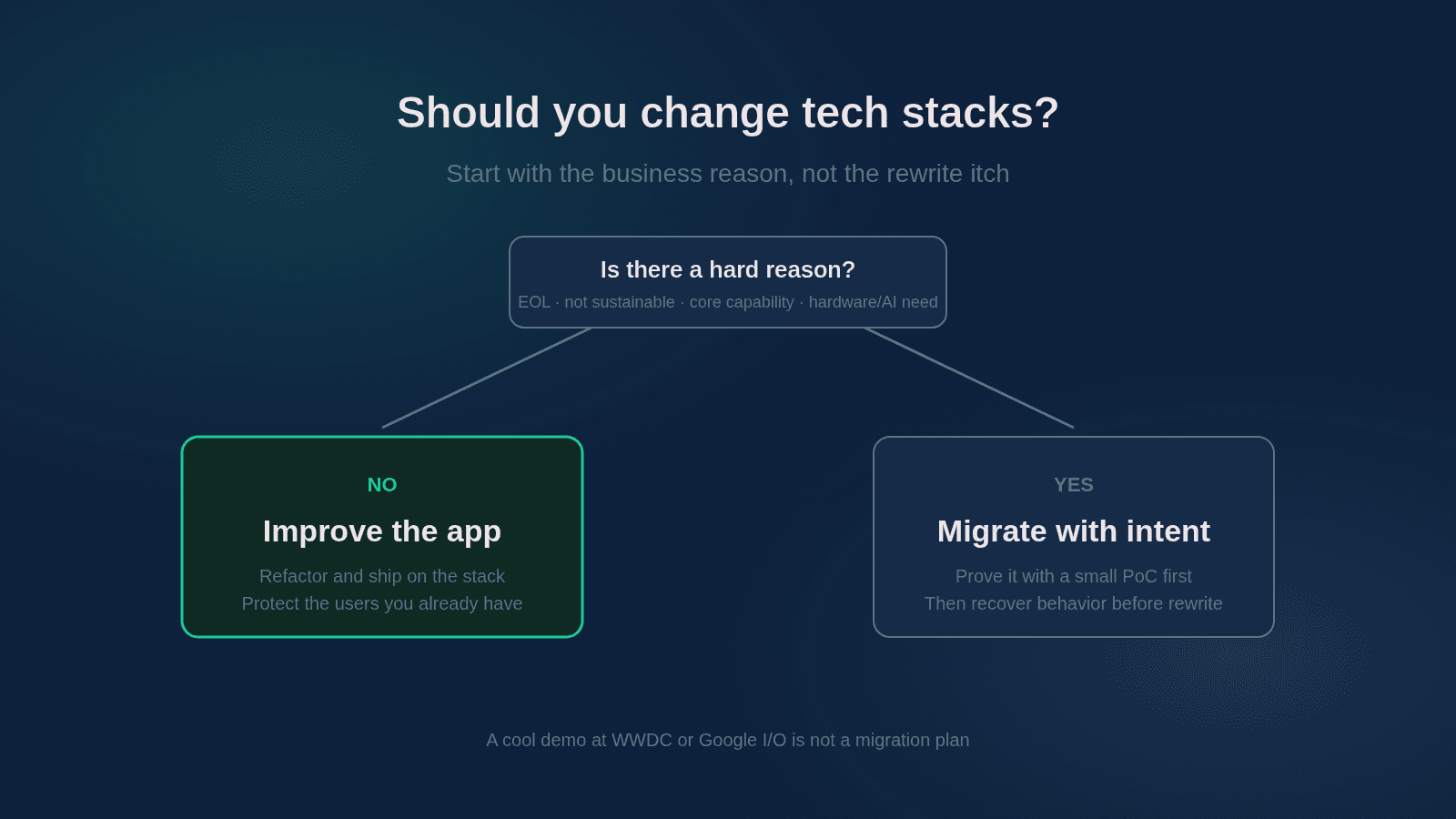
A cool framework demo is not a migration plan. When a live app should change tech stacks, when refactoring wins, and how a small PoC protects the users you already have.
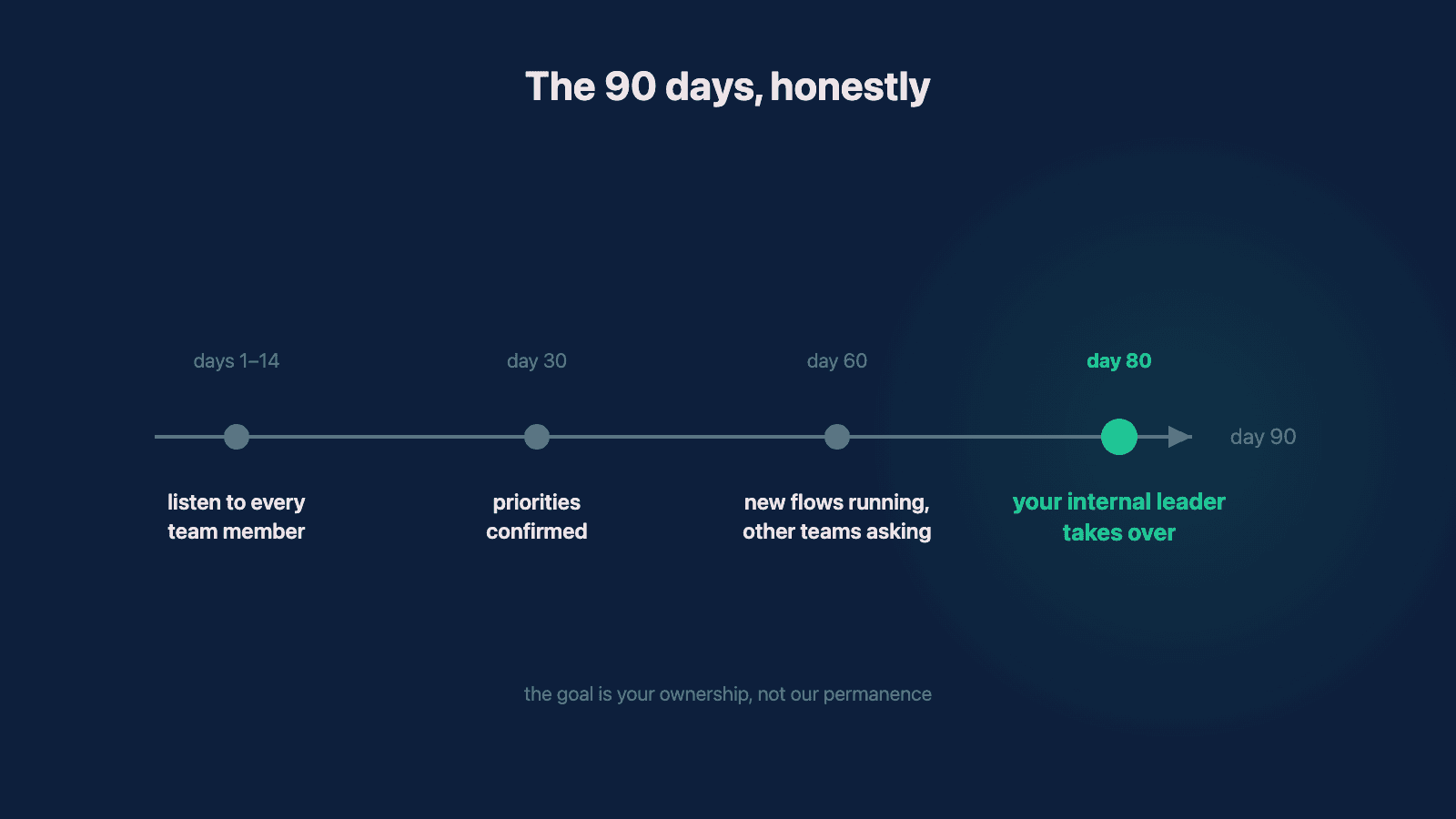
The initial operating window is usually 90 days, but the outcome comes first. Here is how we listen, implement, observe real work, and transfer ownership without pretending every product follows the same calendar.
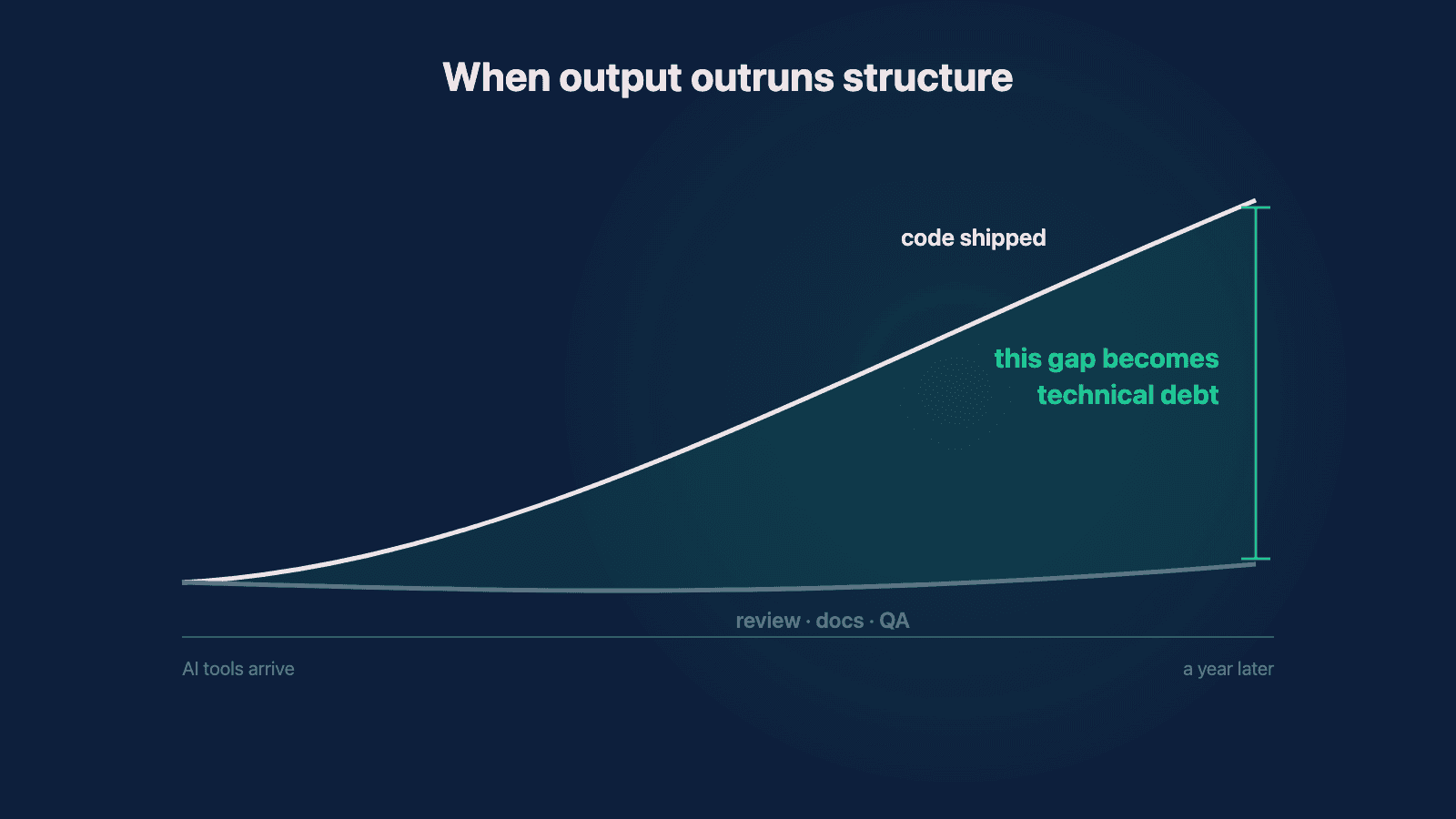
AI lets developers produce code faster than ever. The debt doesn't come from the code itself. It comes from everything that didn't speed up with it: review, documentation, QA, and architecture. That gap is where the trouble accumulates.
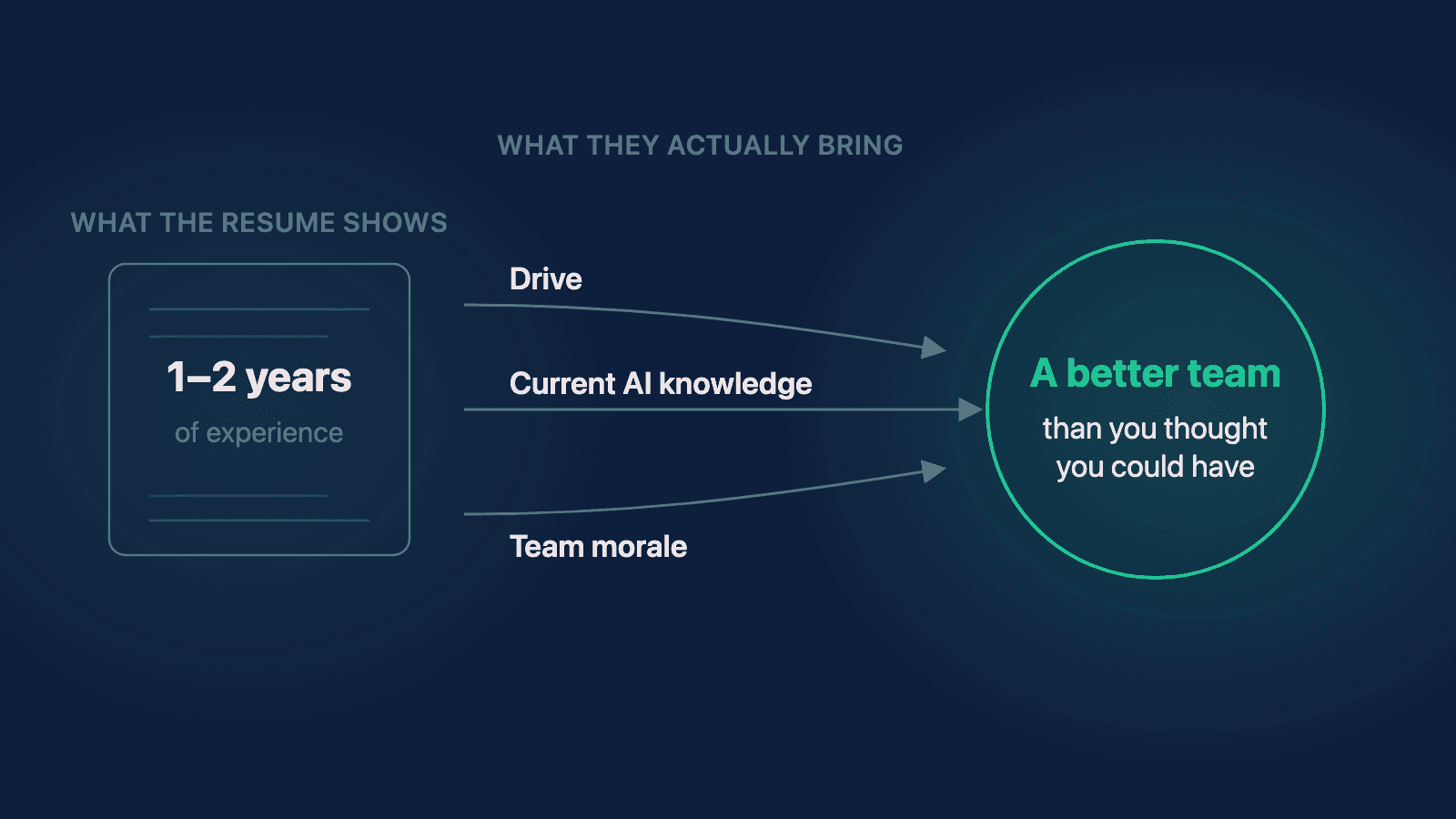
Companies keep finding new reasons not to hire less experienced developers, especially now that AI is in the picture. I think a lot of them are passing on people who could help way more than they realize.
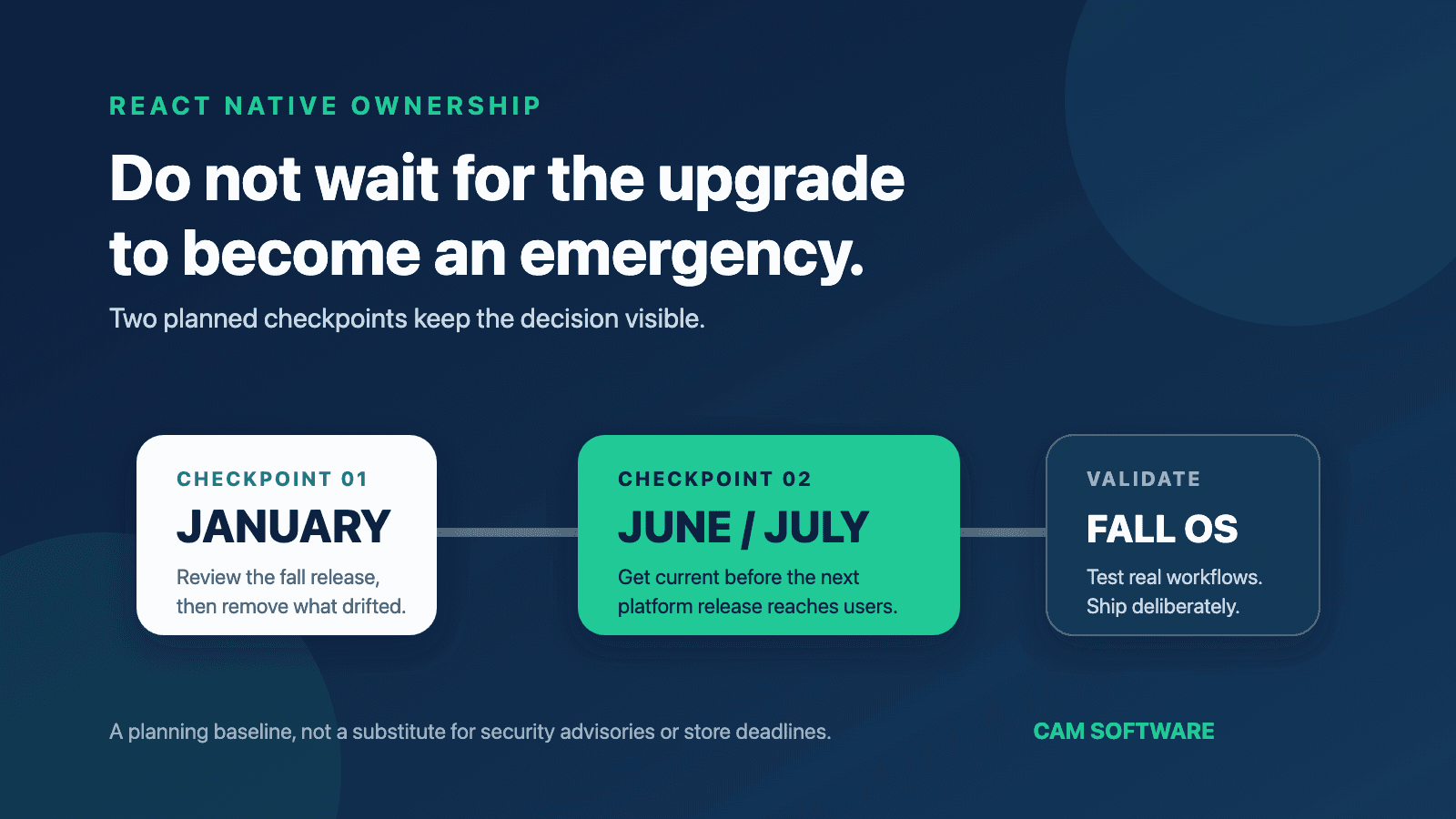
A twice-yearly React Native upgrade review is a practical baseline for many live apps. The point is not chasing every release. It is keeping framework, dependency, platform, and store changes from becoming one emergency.
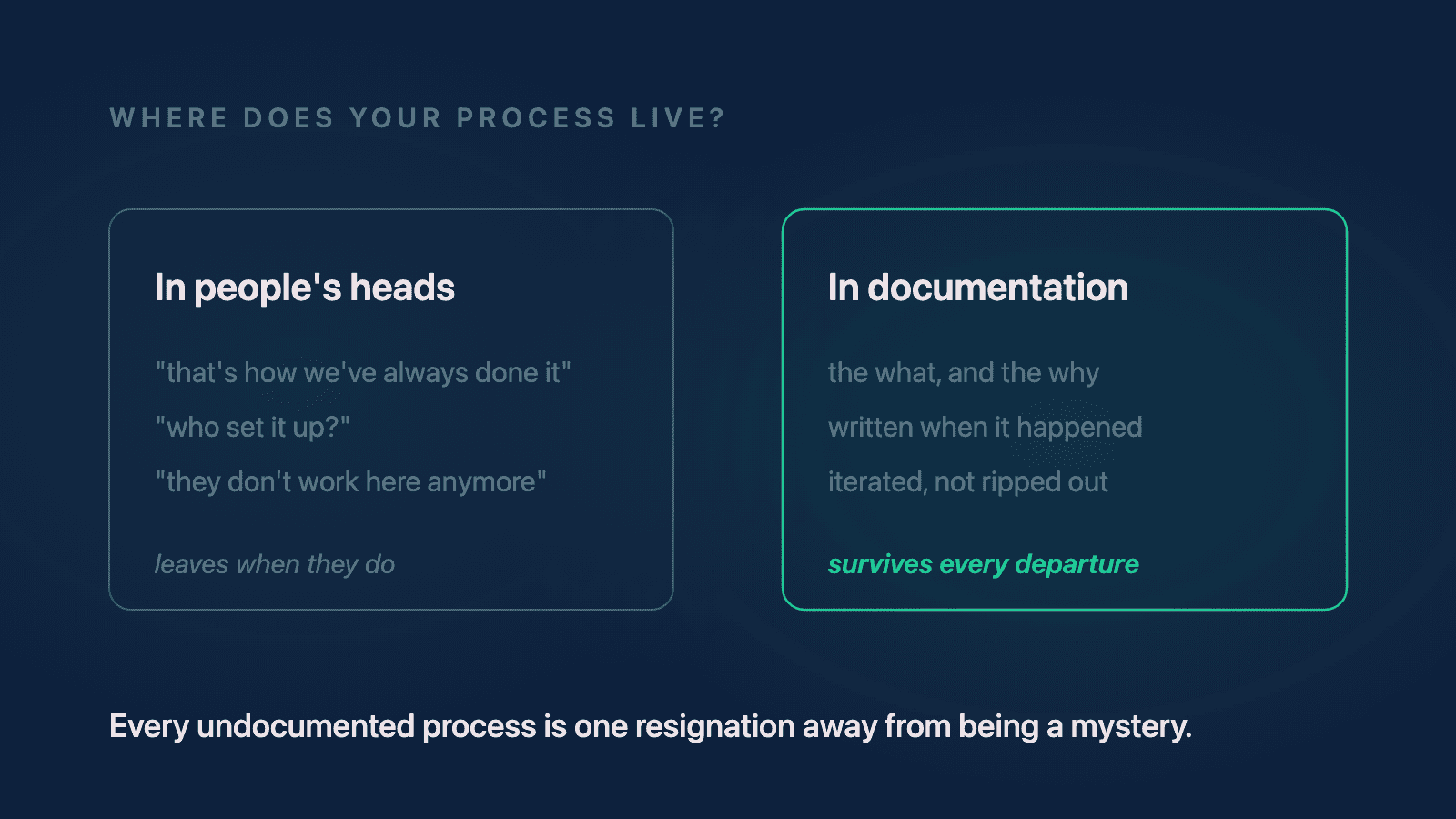
A team told to 'just move this along' with no structure, no documentation, and no process is a slow-motion problem most companies don't recognize until someone leaves. Here's what it costs and how to get ahead of it.